
Feature Wall Painting in High Wycombe | High Wycombe Decorators
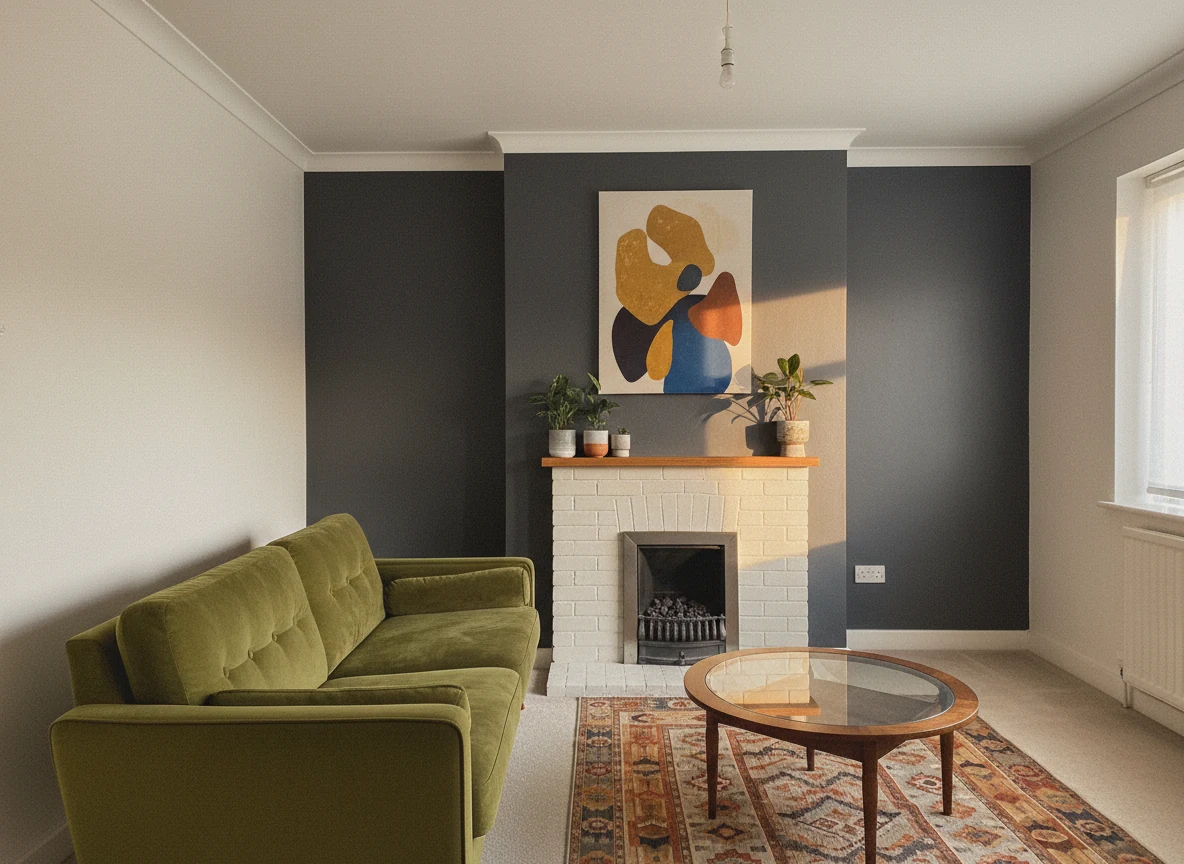
High Wycombe Decorators connects High Wycombe homeowners with a trusted local decorator for feature wall painting.
What High Wycombe Decorators covers:
- Single-statement wall painting in modern Sands and Booker 1970s to 1990s properties
- Magnolia plasterboard sealing primer before dark or saturated colours
- Chimney-breast and alcove feature walls with correct colour-break positioning
- Dark-shade absorbency control to achieve a flat, even finish
Your decorator will paint feature walls across the Wycombe catchment, from the 1970s semis in Sands and Booker to the newer builds in Hazlemere and Downley. For all other interior painting including full-room repaints, see the interior painting page.
Call for a free quote.
How High Wycombe Decorators Works
High Wycombe Decorators connects High Wycombe homeowners with a trusted local decorator. Tell us about the job and we’ll match you with the right decorator for your area — one we know and rate.
From the first site visit to the written quote, the work, and the guarantee that backs it, everything is handled directly between you and your decorator. We make the introduction and stay on hand; they do the work and stand behind it.
Why Choose High Wycombe Decorators
Magnolia Plasterboard Sealing Before Dark Colours
The Sands and Booker 1970s to 1990s stock has absorbent plasterboard walls. Your decorator applies a tinted sealing primer before any dark or saturated feature colour to achieve a flat, even finish.
Clear Pricing
Your decorator quotes a fixed price and it does not change on completion.
Fully Insured
Your decorator carries full public liability insurance on every feature wall programme.
Highly Recommended
High Wycombe Decorators covers the full HP10 to HP16 area.
Feature Wall Painting Services
Magnolia Plasterboard Sealing Primer
The 1970s to 1990s Sands and Booker stock has plasterboard walls with a thin skim coat. The surface is more absorbent than a mature plaster wall. Applying a dark or saturated feature colour over the existing magnolia without first sealing the surface produces uneven coverage and a finish that remains patchy even after multiple coats.
Your decorator will paint feature walls in these properties by applying a tinted sealing primer matched to the intended feature colour before any topcoat. This controls absorbency and produces a flat, even finish in fewer coats.
Chimney-Breast and Alcove Feature Walls
The chimney-breast wall is the most common feature wall in the High Wycombe reception room stock. The alcoves on either side of the chimney breast create an internal geometry that affects where the colour break sits. Carrying the feature colour around the full chimney-breast projection and into the alcoves produces a different visual result than stopping the colour at the chimney-breast face.
Your decorator will advise on the colour-break position at the site visit. Shallow alcoves with a strong feature colour often look better with the colour extended into the recess.
Dark-Shade Absorbency Control
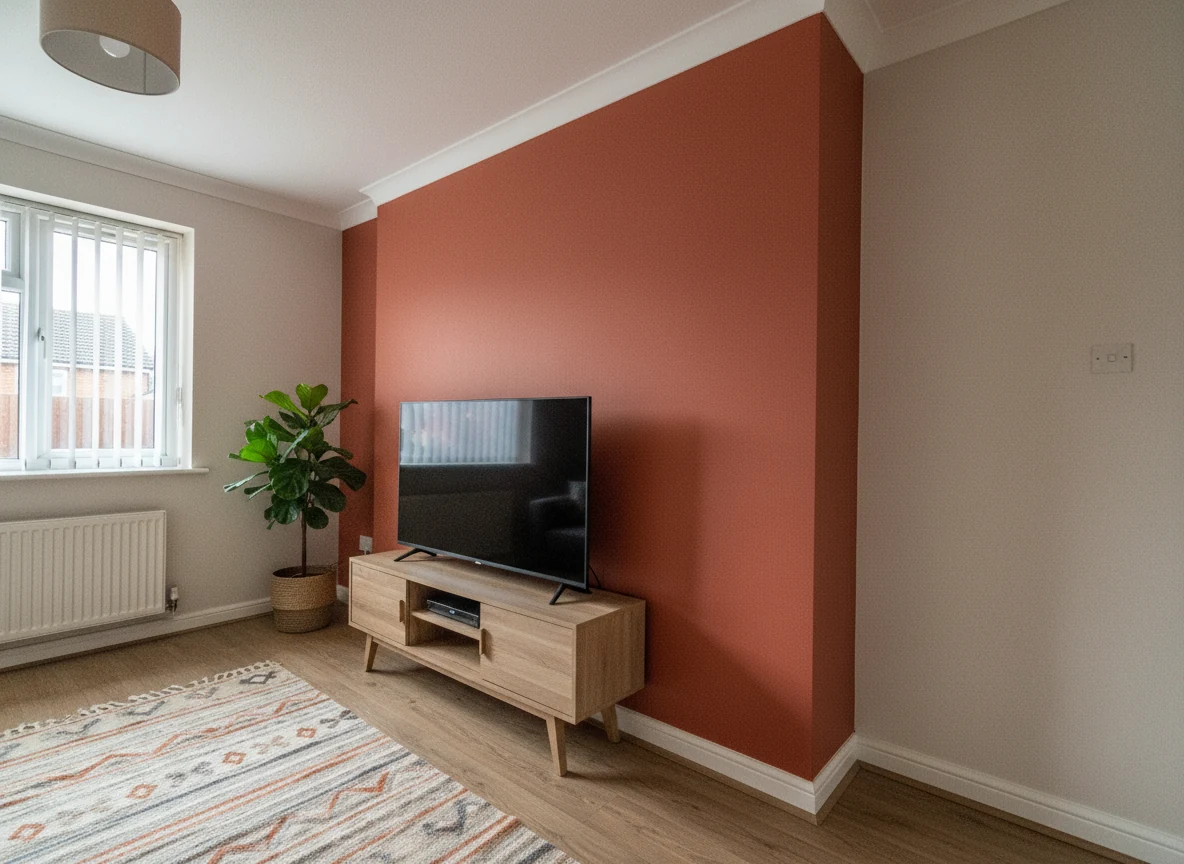
Dark shades including deep navy, charcoal, forest green, and terracotta require more coats on a standard Wycombe plasterboard wall than a mid-tone. Spreading a very dark paint too thinly to cover the wall in one pass produces streaking and lap marks that remain visible in raking light.
Your decorator applies dark feature colours with the correct coat sequence: sealing primer, a tinted undercoat close to the finish colour, and then the topcoat. Three coats are standard for very dark shades on an unsealed plasterboard wall. Your decorator will explain the coat sequence in the quote before work starts.
Living-Room Feature Walls in Modern Properties
Modern properties across Hazlemere, Downley, and Holmer Green have reception rooms suited to a single statement wall. These are typically plasterboard-finished rooms without period features. The main technical requirement is absorbency control and a flat, consistent finish. Minor joint lines and variations in the skim can otherwise show through.
For complementary living room painting on the surrounding walls, see our living-room painting page.
Feature Walls in 1970s to 1990s Sands and Booker Properties
The Sands and Booker 1970s to 1990s housing stock is a common source of feature wall work. These properties have magnolia plasterboard walls in a box-room configuration. The feature wall in the main reception is typically the chimney-breast wall or the wall opposite the window.
Your decorator will paint feature walls in this stock regularly. The sealing primer step, the tinted undercoat, and the correct coat count are all standard practice for this surface type. The result is a flat, saturated finish without patchiness or lap marks.
Get a free feature wall painting quote in High Wycombe
Here’s How It Works
1. Site visit and wall assessment
Your decorator inspects the wall, notes the surface type, existing paint system, and colour change required. Your decorator will identify any joint lines, repairs, or surface variation that need addressing before the feature colour is applied.
2. Surface preparation
Minor joints and repairs are filled and sanded flat. The wall is cleaned and any surface variation is addressed at this stage. Plasterboard joint lines visible under raking light are filled before any colour goes on.
3. Sealing primer
A tinted sealing primer is applied to control absorbency, particularly on plasterboard walls in the Sands and Booker 1970s to 1990s stock. The primer is matched to the intended feature colour and allowed to cure fully before topcoat.
4. Topcoat application
The feature colour is applied in the correct coat count for the shade: one coat for mid-tones over a sealed surface, two or three coats for very dark shades. Each coat is inspected in raking light before the next is applied.
5. Final inspection
The finished wall is checked in both natural and artificial light for even coverage and a consistent sheen level. Colour breaks at corners and alcove returns are checked for a clean edge. Any touches are done before your decorator leaves.
Feature Wall Painting Costs in High Wycombe
Every scope is different. Every wall and colour is different. Call for a precise quote.
Feature wall painting costs in the Wycombe catchment depend on the wall size, the colour selected, the surface condition, and whether a sealing primer is required.
What shapes the cost on a Wycombe project:
Colour depth and coat count
A very dark shade on an unsealed plasterboard wall requires sealing primer, tinted undercoat, and topcoat. A mid-tone colour change on a well-prepared surface may need only two coats. The coat count is confirmed at the site visit and included in the quote.
Wall size and alcove geometry
A chimney-breast wall with alcoves extended into the recesses involves more surface area and more careful colour-break management than a flat single wall. Alcove painting adds time to the programme.
Surface preparation needed
Walls with visible joint lines, repairs, or surface variation need preparation before any feature colour is applied. Painting over an unfilled joint produces a shadow line through the finished colour that remains visible under raking light.
Typical scopes:
Standard plasterboard feature wall: your decorator reviews the scope and confirms the price in a written quote after a site visit.
Dark-shade feature wall: your decorator reviews the scope and confirms the price in a written quote after a site visit.
Chimney-breast feature wall with alcoves: your decorator reviews the scope and confirms the price in a written quote after a site visit.
Call for a no-obligation site visit and written quotation.
Feature Wall Painting Areas Served in High Wycombe
High Wycombe Decorators serves High Wycombe and the surrounding Chiltern district for feature wall painting.
Your decorator will paint feature walls across High Wycombe town centre, Hazlemere, Downley, Tylers Green, Sands, Booker, Cressex, Holmer Green, Flackwell Heath, and the wider HP10, HP12, HP13, HP14, HP15, and HP16 postcodes. The High Wycombe Decorators homepage covers the full service range.