
Hallway Painting in High Wycombe | High Wycombe Decorators
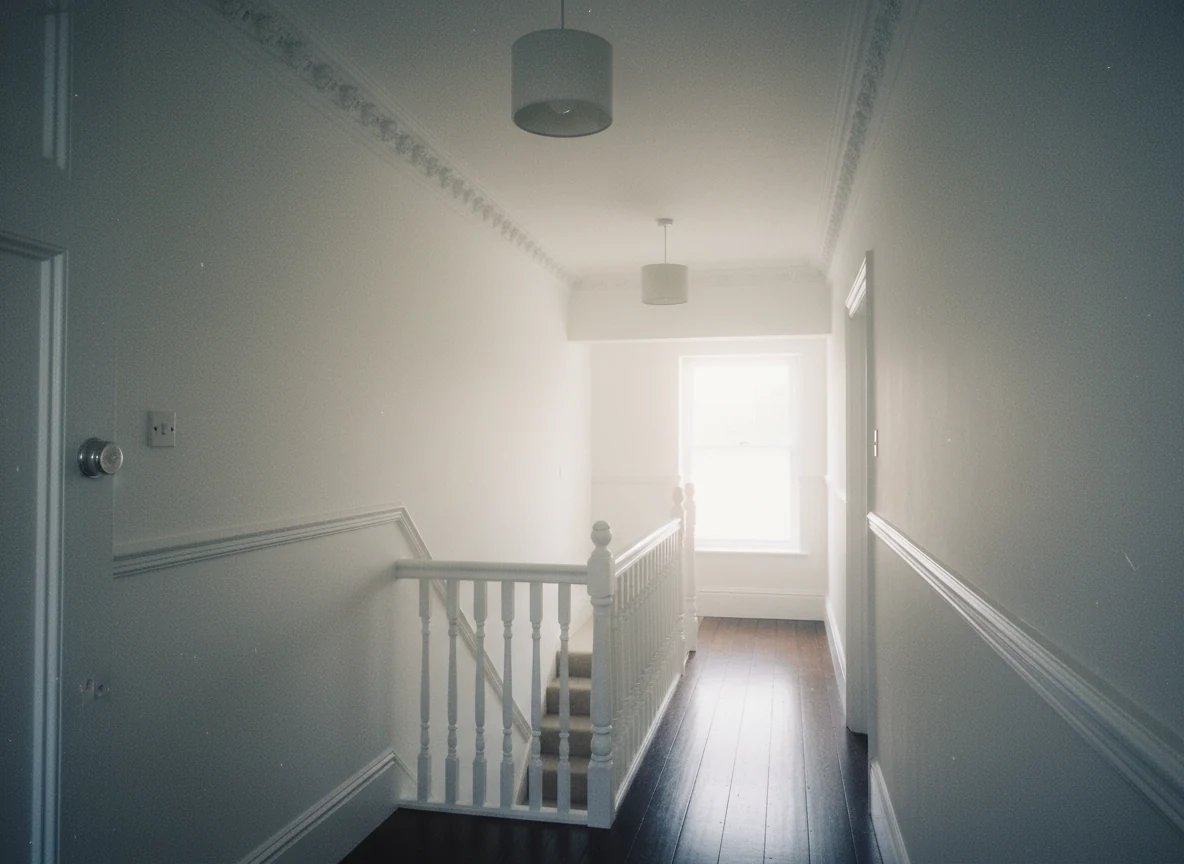
High Wycombe Decorators covers hallway painting across High Wycombe, with the scope planned around the property and surface condition.
What High Wycombe Decorators covers:
- Ceiling, cornice, walls, dado, and staircase painting in the correct sequence
- Period hallways in conservation-street terraces with decorative coving and dado rails
- Preparation of walls damaged by contact points near coat hooks and banister rails
- Protection of freshly painted surfaces between phases on multi-day programmes
Your decorator will sequence period hallway repaints across the Wycombe town-centre conservation streets.
Call for a free quote.
How High Wycombe Decorators Works
High Wycombe Decorators connects High Wycombe homeowners with a trusted local decorator. Tell us about the job and we’ll match you with the right decorator for your area — one we know and rate.
From the first site visit to the written quote, the work, and the guarantee that backs it, everything is handled directly between you and your decorator. We make the introduction and stay on hand; they do the work and stand behind it.
Why Choose High Wycombe Decorators
Correct Sequence Every Time
Ceiling first, coving second, walls third, dado fourth, staircase last. Each phase is protected before the next begins so there is no cross-contamination between surfaces.
Clear Pricing
Your decorator quotes a fixed price and it does not change on completion.
Fully Insured
Your decorator carries full public liability insurance on every hallway programme.
Highly Recommended
High Wycombe Decorators covers the full HP10 to HP16 area.
Hallway Painting Services
Ceiling-to-Dado Sequence in Period Hallways
Victorian terraces on High Wycombe’s conservation streets have entrance halls with decorative coving, high ceilings, and dado rails that divide the wall into two separate surfaces. Painting a period hallway correctly means working in sequence: ceiling first, then coving, then the upper wall field, then the dado cap, then the lower dado field.
Skipping the sequence or working surfaces in the wrong order leaves paint edges that are visible in raking light. Your decorator will sequence period hallway repaints across the Wycombe town-centre conservation streets in the order the surfaces demand. For properties with wallpapered hallways where the existing paper needs stripping before painting, see the wallpapering page.
Staircase Painting as Part of the Hallway Programme
The staircase is the final phase in any hallway painting programme. Painting the staircase before the walls are complete creates a risk of drips onto finished treads and risers. Painting it last, once the hallway walls and ceiling are dry, allows full protection of the completed walls before any stair work begins.
See our staircase painting page for a detailed breakdown of balustrade, spindle, and handrail work included in a full staircase programme.
Protection Between Phases
A hallway with a single entry and staircase access to upper floors cannot be closed off between phases the way a bedroom or reception room can. Every surface that has been completed must be protected before the next phase begins.
Your decorator uses dust sheets and masking film on completed ceiling sections before wall work begins, and on completed wall sections before cornice cutting-in starts. Freshly painted coving is taped off before wall emulsion rollers come near it. This protection approach is the difference between a clean finish and a hall that needs touching up after completion.
Preparation of High-Contact Areas
Hallway walls suffer impact damage near coat hooks, banister posts, door architraves, and light switches that other rooms do not. Walls that have been repainted multiple times without preparation carry layers of emulsion with lifting edges at each scuff point.
Your decorator prepares all high-contact areas before priming. This means filling and sanding scuff marks, consolidating edges of lifted paint, and applying a stabilising mist coat to porous or patchy areas before any topcoat. The hallway is the first room a visitor sees, and preparation quality is visible on a long painted wall in a way it is not in a smaller room.
Colour Planning for a Narrow Hallway
A narrow period terrace hallway reads differently in paint than a wider entrance hall on a Tylers Green executive detached. Dark colours can close in a narrow hall. Light colours with a stronger tone on the dado can add definition without making the space feel smaller.
Your decorator will advise on hallway colour planning at the site visit, including the relationship between the entrance hall colour and the room colours visible through open doors. For the full interior programme across the house, see the interior painting page.
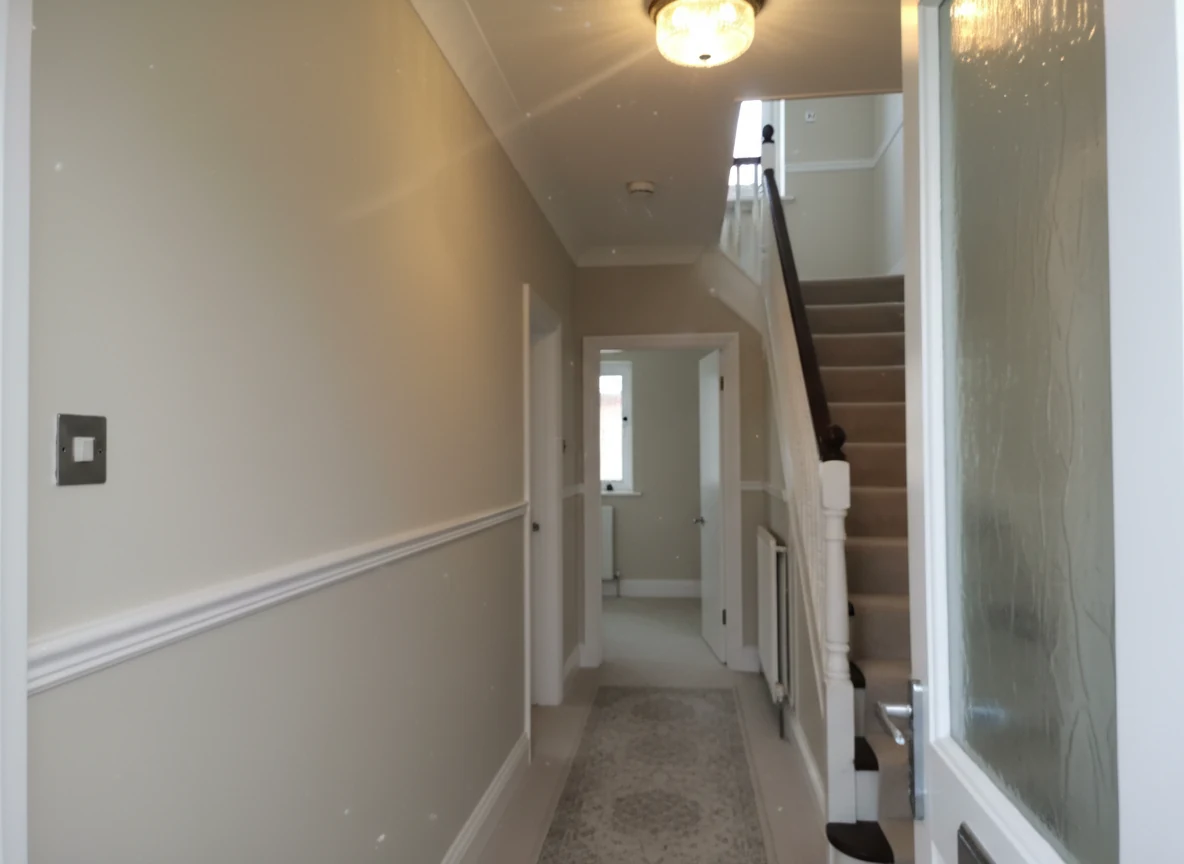
Get a free hallway painting quote in High Wycombe
Here’s How It Works
1. Site visit and hallway assessment
Your decorator inspects the ceiling, coving, walls, dado, and staircase. Your decorator notes the paint condition, substrate type, surface damage, and access restrictions. Your decorator confirms the sequence and phase plan at this stage.
2. Preparation
Your decorator fills and sands all damage on high-contact wall areas, stabilises any porous or patchy plaster, and cleans the ceiling and coving before painting begins. Your decorator protects flooring and any furniture that cannot be removed from the space.
3. Ceiling and coving
Ceiling first, coving second. Your decorator cuts in the ceiling at the coving line and allows the ceiling coat to dry before cutting into the coving itself. Coving is painted once the ceiling is complete and protected.
4. Upper wall field, dado cap, and lower dado field
Upper walls are painted in sequence with the dado cap and lower dado colour. Masking is applied between colour fields to keep the line crisp between the upper and lower wall colours.
5. Staircase
Staircase painting is the final phase. Completed hallway walls are protected before any stair work begins. Handrail, spindles, newel post, and risers are each assessed and prepared individually before topcoat.
Hallway Painting Costs in High Wycombe
Every scope is different. Every property is different. Call for a precise quote.
Hallway painting costs in the High Wycombe catchment reflect the ceiling height, the number of surfaces in scope, the amount of preparation needed on high-contact wall areas, and whether the staircase is included.
What shapes the cost on a Wycombe hallway project:
Ceiling height and coving detail
Period hallways on High Wycombe’s conservation streets have higher ceilings and more complex coving than 1970s or 1980s semis in Sands or Downley. More ceiling height means more long-reach equipment and longer cutting-in time on the coving.
Number of surfaces in scope
A ceiling-and-walls hallway programme is the minimum scope. Including dado cap, lower dado, staircase handrail, spindles, and risers extends the programme and the material cost.
Preparation required
A hallway that has been maintained regularly needs less preparation than one with multiple scuff marks, lifted paint edges, and exposed plaster at high-contact points.
Typical scopes:
Entrance hall, ceiling and walls only: your decorator reviews the scope and confirms the price in a written quote after a site visit.
Period hallway with coving and dado: your decorator reviews the scope and confirms the price in a written quote after a site visit.
Full hallway and stair hall programme including staircase handrail, spindles, and risers: your decorator prices this scope in a written quote.
Call for a no-obligation site visit and written quotation.
Hallway Painting Areas Served in High Wycombe
High Wycombe Decorators serves High Wycombe and the surrounding Chiltern district for hallway painting.
Your decorator will cover High Wycombe town centre, Hazlemere, Downley, Tylers Green, Sands, West Wycombe, Lane End, and the wider HP10, HP12, HP13, HP14, HP15, and HP16 postcodes. The High Wycombe Decorators homepage covers the full service range.