
Door Painting in High Wycombe | High Wycombe Decorators
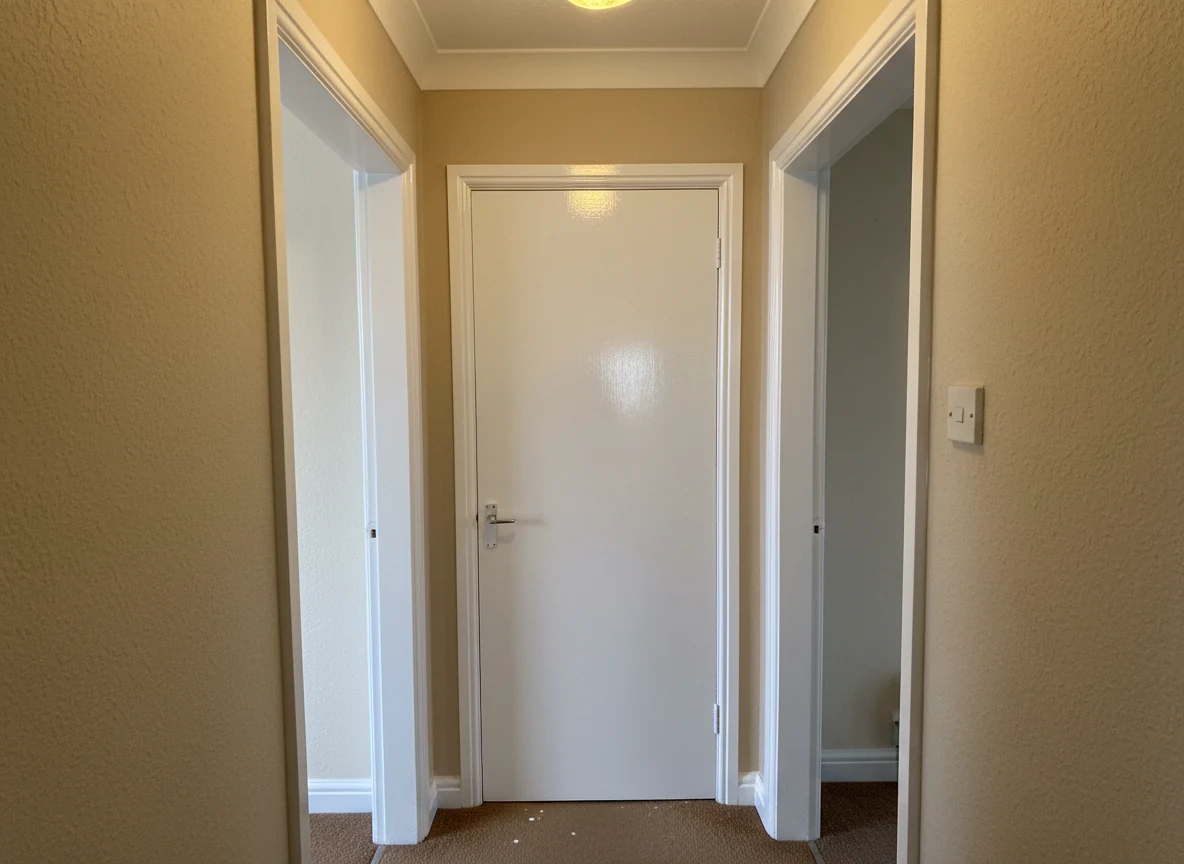
High Wycombe Decorators paint internal doors across the full Wycombe catchment, from hollow flush doors in the 1970s Cressex and Booker stock to panelled doors in Tylers Green detached homes. We cover preparation, priming, and finish coat on all internal door types, including multi-coat build-ups that need cutting back before any new paint is applied.
What we cover:
- Hollow flush door strip-and-repaint in 1970s Cressex and Booker properties
- Panelled door painting including frame, architrave, and door stop
- Multi-layer paint build-up cut-back and surface restoration
- Door-frame and lining painting for a consistent interior finish
High Wycombe Decorators paint internal doors in properties across the Wycombe catchment, from the post-war semis in Sands and Cressex to the executive detached homes in Tylers Green. For front door painting, see our front door painting page.
Call 01494 326400 for a free quote.
Why Choose High Wycombe Decorators
Flush Door Build-Up Cut-Back as Standard
The hollow flush doors in the 1970s Cressex and Booker stock accumulate layers that produce a rough skin and peel at the edges. We cut back, fill, and prime correctly before any new coat goes on.
Clear Pricing
Fixed price from the first quote. No unexpected additions on completion.
Fully Insured
Full public liability cover on every door painting programme.
Highly Recommended
High Wycombe Decorators covers the full HP10 to HP16 area.
Internal Door Painting Services
Hollow Flush Door Strip-and-Repaint in 1970s Stock
The Cressex and Booker 1970s housing stock contains a large volume of hollow flush doors. These doors accumulate paint layers quickly. Once three or more coats have built up, the edges begin to show a rough, stepped profile and the door can begin to peel at the frame contact point.
High Wycombe Decorators paint internal doors in these properties by cutting back accumulated layers first, filling any edge damage, and applying a fresh primer and topcoat. Simply applying new paint over a degraded surface produces a short-lived result. For hallway painting in the same property, see our hallway painting page.
Panelled Door Painting Including Frame and Architrave
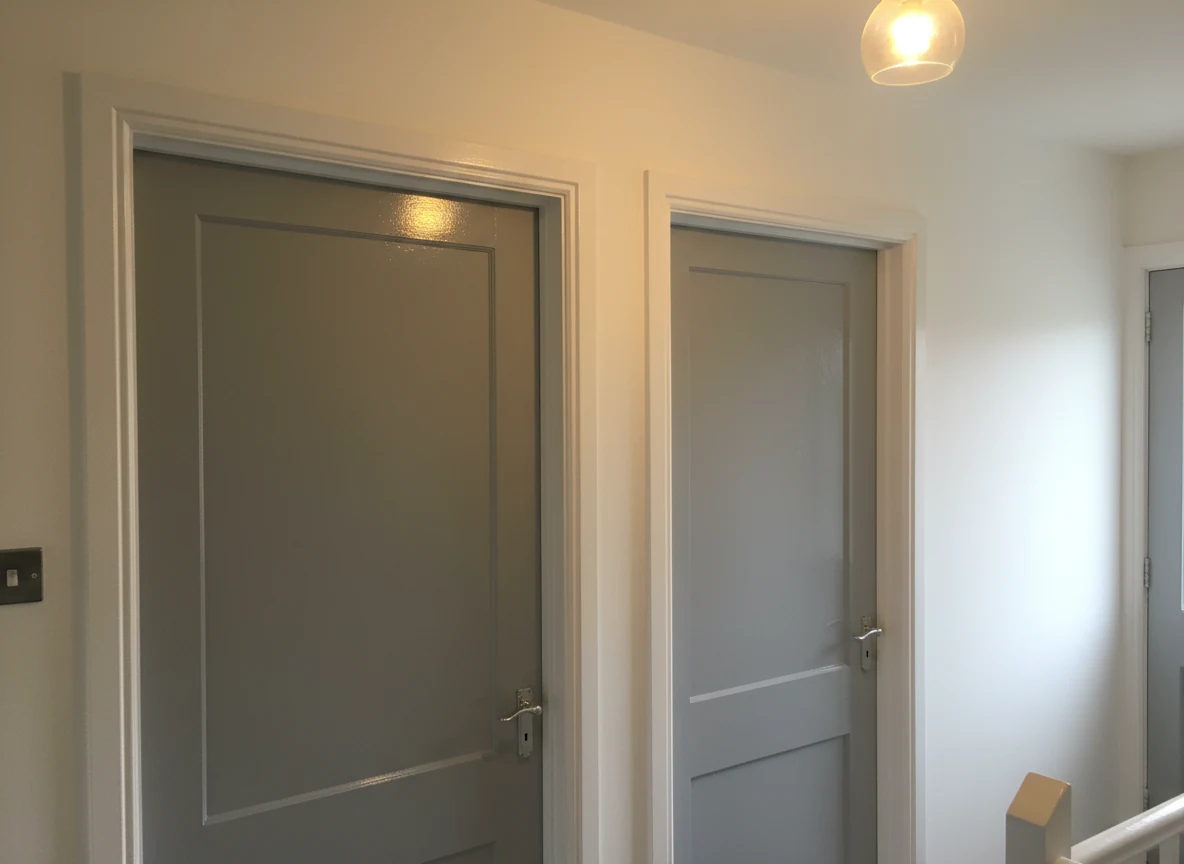
Panelled doors on period and modern properties require careful masking and a planned painting sequence. The panel faces, panel mouldings, rails, stiles, and door frame are each a separate surface. Painting them in the wrong sequence produces runs at panel joins and a finish that looks rushed.
Your decorator paints panelled doors in the correct sequence: frame and lining first if the colour differs, then architrave, then the door itself starting at the panels and working outward to the stiles.
Multi-Layer Build-Up Cut-Back
Many interior doors in the Wycombe catchment have been painted multiple times. On flush doors, this produces a skin that cracks and peels at the edges. On panelled doors, it fills the moulding detail and buries the shadow line that gives the door its character.
Your decorator assesses the paint build-up at the site visit and advise on the right preparation method. Light build-up can be cut back with a fine abrasive. Heavy build-up or paint that is lifting at the edges needs stripping before any new coat is applied.
Door-Frame Fit and Edge Clearance
Repeated paint applications on door edges and frame faces reduce the clearance between the door and the frame. A door that sticks or drags after a repaint was not correctly prepared. We check the edge clearance at the site visit and account for the new coat thickness in the preparation.
The 1970s Cressex and Booker flush doors often have narrow frame clearances. We plan the preparation accordingly so the door closes cleanly after painting.
Interior Door Painting Across Property Types
Internal door painting across the Wycombe catchment covers very different properties. The conservation-street terraces have panelled doors with moulded profiles. The 1970s and 1980s stock in Cressex, Booker, and Sands has hollow flush doors in a variety of conditions.
For full interior painting programmes that include doors, walls, ceilings, and woodwork throughout, see our interior painting page.
Get My Free Quote
Get a free door painting quote in High Wycombe
Here’s How It Works
1. Site visit and door assessment
Your decorator inspects the doors, frames, and architraves. Your decorator notes the paint build-up depth, condition of the edges, door fit in the frame, and any moulding detail that needs restoring. Your decorator confirms the preparation method and product specification at this stage.
2. Surface preparation
Accumulated paint is cut back or stripped at problem areas. Edge damage is filled and sanded flush. Bare sections receive the appropriate primer for the substrate. The surface is clean and stable before any new coat is applied.
3. Priming
All stripped or bare sections are primed before any topcoat. The primer is matched to the substrate: wood primer on bare timber, adhesion primer on surfaces that have had previous coatings removed. The primer is allowed to cure fully before topcoat application begins.
4. Topcoat application
Painting follows the correct sequence: frame and lining first where the colour differs, then architrave, then the door itself. Two topcoats are applied where the colour change requires additional coverage. Each coat is allowed to cure before the next.
5. Final check and frame clearance
Each door is checked for coverage at edges, panel joins, and moulding detail. The door is tested in the frame to confirm clearance and closes cleanly. We leave the door open for the initial curing period and advise on full cure time.
Door Painting Costs in High Wycombe
Prices below are estimates only. Every property is different. Call 01494 326400 for a precise quote.
Internal door painting costs in the Wycombe catchment depend on the number of doors, the type of door, the paint build-up condition, and whether frames and architraves are included.
What shapes the cost on a Wycombe project:
Build-up condition
A flush door in the 1970s Cressex and Booker stock with heavy accumulated paint takes longer to prepare than a lightly coated door with a sound surface. Cut-back and fill work adds preparation time before any new coat is applied.
Door type: flush versus panelled
Panelled doors with moulded profiles take more time to paint correctly than flat flush doors. The moulding sequence adds careful brush work at each panel joint. Period panelled doors in the conservation-street terraces are the most detailed.
Scope: door only or complete door set
A door-only refresh is a smaller scope than a complete door set including the frame, architrave on both sides, and door stop. Including all elements in the same programme produces a consistent result and is more efficient than separate visits.
Typical ranges:
Hollow flush door (1970s Cressex or Booker semi), preparation and repaint including frame: £80 to £140 per door.
Panelled door (Tylers Green detached or conservation-street terrace), painted in correct sequence including architrave: £100 to £160 per door.
Multi-door programme (whole-house door painting as part of a wider interior programme): priced as a programme. Call 01494 326400 for a written quote.
Call 01494 326400 for a no-obligation site visit and written quotation.
Door Painting Areas We Serve in High Wycombe
We serve High Wycombe and the surrounding Chiltern district for internal door painting.
High Wycombe Decorators paint internal doors across High Wycombe town centre, Hazlemere, Downley, Tylers Green, Sands, Booker, Cressex, Holmer Green, Flackwell Heath, and the wider HP10, HP12, HP13, HP14, HP15, and HP16 postcodes. Return to the High Wycombe Decorators homepage to explore all services.
Door Painting FAQs
Get My Free Quote
Fill in the form below for a free quote: